
Southern Costa Rica has quietly become one of the most consistent big-game fishing regions in the Eastern Pacific. While many anglers recognize names like Los Sueños or Quepos, experienced fishermen increasingly look farther south toward Golfito, Puerto Jiménez, and the waters surrounding the Osa Peninsula.
The reason is not hype. It is geography.
Here, deep offshore water, protected coastline, migrating pelagic species, and minimal boat pressure combine to create fishing conditions that are difficult to duplicate elsewhere in Costa Rica.
This guide explains what actually makes the area special, what you can realistically expect on a trip, and how fishing here differs from traditional marina-based destinations.
Table of Contents
- Why Southern Costa Rica Fishing Is Different
- Golfito and the Osa Peninsula Explained
- What You Can Actually Catch Here
- What a Real Day on the Water Looks Like
- Who Is Actually Running These Trips
- Understanding Ocean Conditions and Seasons
- Getting to Southern Costa Rica
- Why Anglers Choose Colio Sportfishing
- Planning Your Trip
Why Southern Costa Rica Fishing Is Different
Most people imagine Costa Rica fishing as long offshore runs before lines ever enter productive water. That is true in some areas of the country, but not in the southern zone.
The continental shelf drops quickly near the Osa Peninsula. Instead of traveling 30-50 miles to find blue water, boats often reach pelagic migration zones far sooner. The result is simple: more time fishing and less time traveling.
Another major factor is pressure. In heavily developed marina hubs, dozens of boats may work the same current line or temperature break. In Southern Costa Rica, fewer boats operate daily, which changes fish behavior significantly. Pelagic species such as tuna and sailfish feed more naturally when not surrounded by boat traffic.
The area is influenced by both open Pacific currents and the protected waters of the Golfo Dulce, creating multiple fishing options within a single day.
Golfito and the Osa Peninsula Explained
Golfito sits inside the Golfo Dulce, a deep tropical gulf where offshore depths increase quickly. Across the water lies Puerto Jiménez and the outer coastline of the Osa Peninsula, one of the most biologically dense regions in Central America.
From a fishing perspective, this location offers three environments:
Protected Gulf Waters – calmer conditions and bait schools
Coastal Structure – rocky points and reefs attracting roosterfish and snapper
Blue Water Offshore – pelagic migration routes for tuna, sailfish, and marlin
Because these zones are close together, trips can adapt quickly to daily conditions rather than committing to one fixed plan.
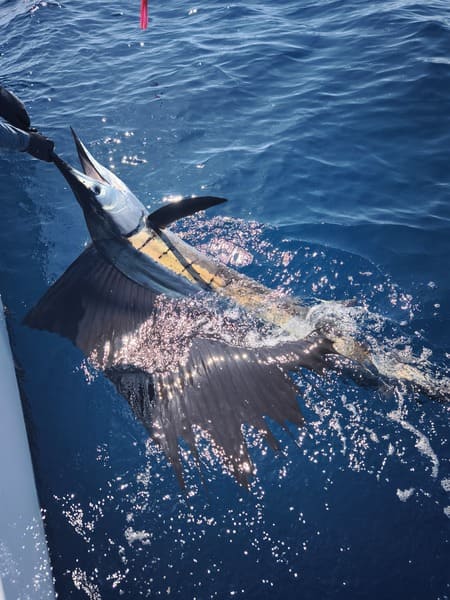
Multi-Species Fishing in Southern Costa Rica
Southern Costa Rica is a true multi-species fishery. The region does not rely on a single seasonal run. Instead, different pelagic and inshore species rotate through the waters surrounding the Osa Peninsula and Golfito throughout the year, allowing anglers consistent opportunities for offshore and nearshore action.
Yellowfin Tuna
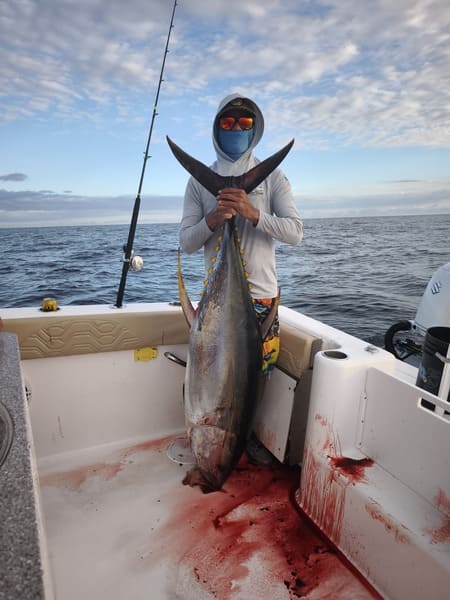
Large schools of yellowfin tuna migrate along current edges and temperature breaks offshore. These fish frequently travel with dolphins and feed aggressively on surface bait balls, creating explosive topwater action and multiple hookups.
Sailfish
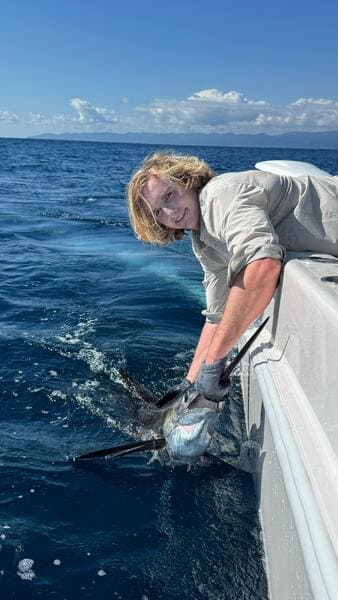
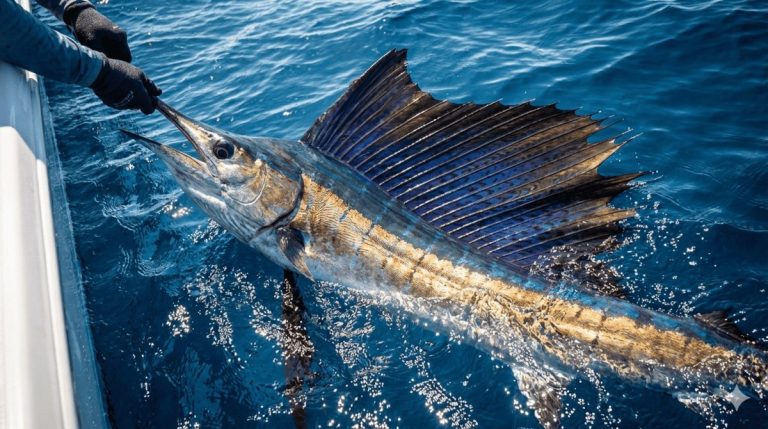
Sailfish are among the most consistent billfish species in Southern Costa Rica and regularly provide fast-paced offshore fishing. Trolling offshore waters outside the Osa Peninsula often produces repeated encounters during active periods.
Blue and Black Marlin
Blue and black marlin move along deeper offshore structure, especially when bait concentrations increase. These powerful pelagic predators represent the premier big-game fishing opportunity in the region and are commonly targeted in offshore bluewater conditions.
Cubera Snapper and Roosterfish
Rocky points, reefs, and nearshore structure produce aggressive inshore predators such as cubera snapper and roosterfish. These species require different techniques than offshore trolling and provide intense fights in relatively shallow water.
What a Real Day on the Water Looks Like
A typical trip does not follow a rigid schedule. Conditions determine the plan each morning.
Captains monitor water temperature, current direction, bird activity, bait presence, and surface life before deciding whether to run offshore or stay near structure.
Some days produce tuna feeding on the surface. Other days favor sailfish along a current edge. Flexibility is essential.
Anglers are encouraged to participate — setting drags, working baits, and learning how trolling spreads are arranged — creating a hands-on experience rather than passive sightseeing.
Who Is Actually Running These Trips
These updates are written from daily time on the water.
Colio Sportfishing operates under Capt. Mike Hennessy and Capt. Luis Enrique, combining decades of global big-game experience with lifelong local knowledge of the waters surrounding Puerto Jiménez and Golfito.
Because the crew fishes consistently, they track subtle changes in seasonal timing, current movement, and bait presence. Trips are planned according to real-time conditions rather than preset routes.
Understanding Ocean Conditions and Seasons
Fishing in Southern Costa Rica is available year-round, but ocean conditions evolve throughout the calendar.
Rain typically arrives in short tropical bursts rather than prolonged storms. Seasonal influences include water temperature shifts, moon phases, current strength, and bait migrations.
Unlike northern Costa Rica destinations that rely heavily on peak billfish months, the southern zone maintains multi-species opportunities across much of the year.
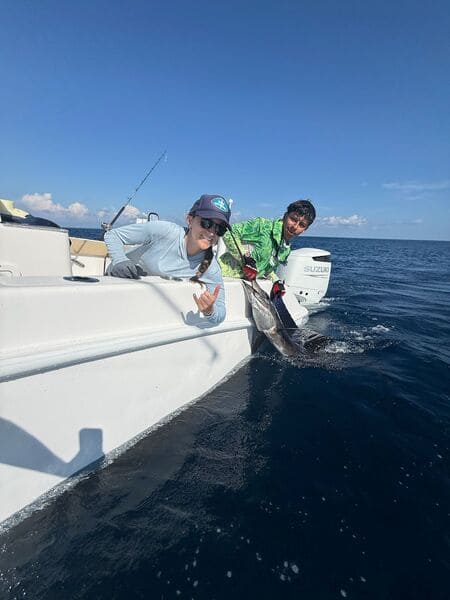
Understanding Ocean Conditions and Seasons
Fishing in Southern Costa Rica is available year-round, but ocean conditions evolve throughout the calendar.
Rain typically arrives in short tropical bursts rather than prolonged storms. Seasonal influences include water temperature shifts, moon phases, current strength, and bait migrations.
Unlike northern Costa Rica destinations that rely heavily on peak billfish months, the southern zone maintains multi-species opportunities across much of the year.
Getting to Southern Costa Rica
Most anglers fly into San José International Airport (SJO) and connect via a short domestic flight south to Golfito or Puerto Jiménez. The coastal flight reduces ground transfer time and places visitors close to the fishing grounds the same day they arrive.
Why Anglers Choose Colio Sportfishing
Experienced anglers look beyond boat photos and pricing. They prioritize local knowledge, adaptability, and communication.
Colio Sportfishing focuses on involvement. Guests learn techniques, understand daily decisions, and participate throughout the trip. Many visitors return because of the overall experience rather than a single catch.
Planning Your Trip
When planning a Southern Costa Rica fishing trip, consider group size, preferred species, time of year, and trip duration.
Half-day trips work well for families. Full-day trips allow offshore flexibility. Multi-day visits increase opportunities because ocean conditions change daily.
Advance booking is recommended during peak travel periods.
Colio Sportfishing departs from Fish Hook Marina & Lodge in Golfito, located minutes from Golfito Airport and accessible from Puerto Jiménez by water taxi.
3 Fun Facts About Fishing in Southern Costa Rica
The Golfo Dulce Is Technically a Tropical Fjord
Most people think it’s just a bay. It’s not.
The Golfo Dulce is one of the only tropical fjord-like gulfs in the world — meaning it has deep water very close to shore and limited oxygen exchange at depth. That unique structure creates nutrient layering that supports massive bait concentration near the Osa Peninsula.
In simple terms?
Deep water + protected structure + bait = predators don’t have to travel far.
That’s one reason billfish and tuna show up consistently off Golfito.
You Can Be in 1,000+ Feet of Water Shockingly Fast
In many destinations, boats run 20-40 miles before reaching productive blue water.
Off the Osa Peninsula, the continental shelf drops quickly. That means you can go from calm protected gulf water to serious offshore structure in a fraction of the time.
Less running.
More fishing.
And more time with lines in the water.
Southern Costa Rica Has Less Boat Pressure Than Most Major Sportfishing Hubs
Here’s something most brochures won’t say:
Fishing pressure changes fish behavior.
In larger marina hubs, dozens of boats can work the same current break. In Southern Costa Rica, fleet size is smaller and development is limited.
That means:
- Less prop noise
- Less bait scattering
- More natural feeding patterns
Serious anglers notice the difference quickly.
5 Real-World FAQs (Not the Generic Stuff)
“If Los Sueños is famous… why would I fish Golfito instead?â€
Fame and fishing conditions are not the same thing.
Los Sueños is built around a luxury marina and tournament circuit. Golfito is built around geography — quick access to deep water, protected travel routes, and lower fleet pressure.
If you want nightlife and resort energy, head north.
If you want quieter water and serious blue-water structure, head south.
“What happens if the offshore water gets rough?â€
That’s one of the advantages of this region.
Because the Golfo Dulce is protected, trips rarely have to cancel outright. If offshore swell builds, captains can pivot to inshore structure, roosterfish zones, snapper reefs, or calmer edges near the peninsula.
You’re not stuck at the dock because one weather model shifts.
“Is this a good place for someone who has never caught a billfish?â€
Absolutely.
Southern Costa Rica offers consistent sailfish and marlin opportunities without extreme run times offshore. That increases the odds of encounters, especially for first-time big-game anglers.
And because of calmer access routes, it’s often more comfortable for beginners than wide-open exposed coastlines.
“Can we actually mix offshore and inshore in the same trip?â€
Yes — and that’s one of the region’s biggest strengths.
Depending on bait movement and season, a single day may include:
- Trolling for sailfish offshore
- Tuna schools mid-water
- Snapper or roosterfish near structure
You don’t need separate marinas or multiple bookings to experience variety.
“Is Southern Costa Rica harder to reach?â€
It used to be. Not anymore.
Most guests fly into San José (SJO) and take a short scenic domestic flight south. Many anglers say that flight over rainforest coastline is part of the adventure.
Instead of long highway drives, you land almost directly in fishing country.
Who’s Actually Running These Trips?
This report isn’t coming from a marketing office or a resort front desk. Every update is written from the boat.
Colio Sportfishing is operated daily by Capt. Mike Hennessy and Capt. Luis Enrique, who spend more days offshore than most anglers fish in a lifetime. Between them is a mix you rarely find in one charter — global big-game tournament experience paired with a captain born and raised in Puerto Jiménez who learned these waters long before they appeared on travel maps.
Because we’re on the ocean nearly every day, we see the subtle things visitors never notice — when the current pushes blue water tight to shore, when flying fish show up early, or when tuna move offshore a week ahead of the seasonal pattern. Those small details are often the difference between a sightseeing cruise and a real fishing day.
That’s also why Southern Costa Rica behaves differently than marina destinations farther north. Here, decisions are made based on conditions that morning, not a preset plan. Some days we run offshore. Some days we stay near structure. The fish — not the schedule — decides the trip.